
Houghton Projected Versus Actual Release
“Projected release date” is a useful search phrase, but Michigan records use more exact terms. On an MDOC prisoner profile, OTIS can show an Earliest Release Date and a Maximum Discharge Date. The first is generally the point when the Michigan Parole Board gains jurisdiction after the applicable minimum term has been served. It is not a promise of parole. The maximum date marks the end point of the sentence as calculated in that record, subject to lawful corrections or later court action.
An actual release is a completed custody event. For a state prisoner, look later for a Date Paroled and a current status that supports release to parole. For a Houghton County jail inmate, the Sheriff’s release entry records when the person left the Corrections Facility or Work Camp and whether the event was community release or transfer. A transfer out of Houghton is not release from custody.
Pretrial cases are different. A detainee who has not been sentenced may have a bond amount, a hearing date, or an order, but no computed sentence-completion date. Court action, payment, holds, and processing can all affect the exit. Check the 97th District Court for lower-court events and the 12th Circuit Court for a felony after bind-over, then ask Houghton Corrections whether physical custody ended.
Find Houghton County Release Dates
Begin with the last known custodian. Someone serving a jail-only sentence at the Houghton County Corrections Facility will not appear in OTIS merely because the case is criminal. Someone transferred to an MDOC prison after a felony sentence belongs in the state system. The full name, date of birth, booking or case number, and six-digit MDOC number are useful identifiers when legitimately known.
- For local custody, call Houghton Corrections at 906-482-1742 and ask whether the person remains physically housed.
- Use MiCOURT to find the judgment, sentence, jail credit, bond order, dismissal, or later court action.
- Ask the Sheriff for the existing calculation or release entry when a county sentence date needs durable confirmation.
- For MDOC custody, open the official OTIS search and use the six-digit MDOC number when available.
- Read the exact fields: Current Status, Earliest Release Date, Maximum Discharge Date, Date Paroled, and Discharge Date where shown.
- Confirm sentencing-data errors with the sentencing court and supervision values with the assigned parole or probation office.
The official OTIS search form accepts an MDOC number or a name search. A number search is more precise. With a name, compare the profile’s identifying data, aliases, sentencing county, court file number, and offense before relying on a date. OTIS warns that a commitment name may differ from a current legal name.
The search screen below shows the official Michigan channel for state-prison and MDOC supervision records.
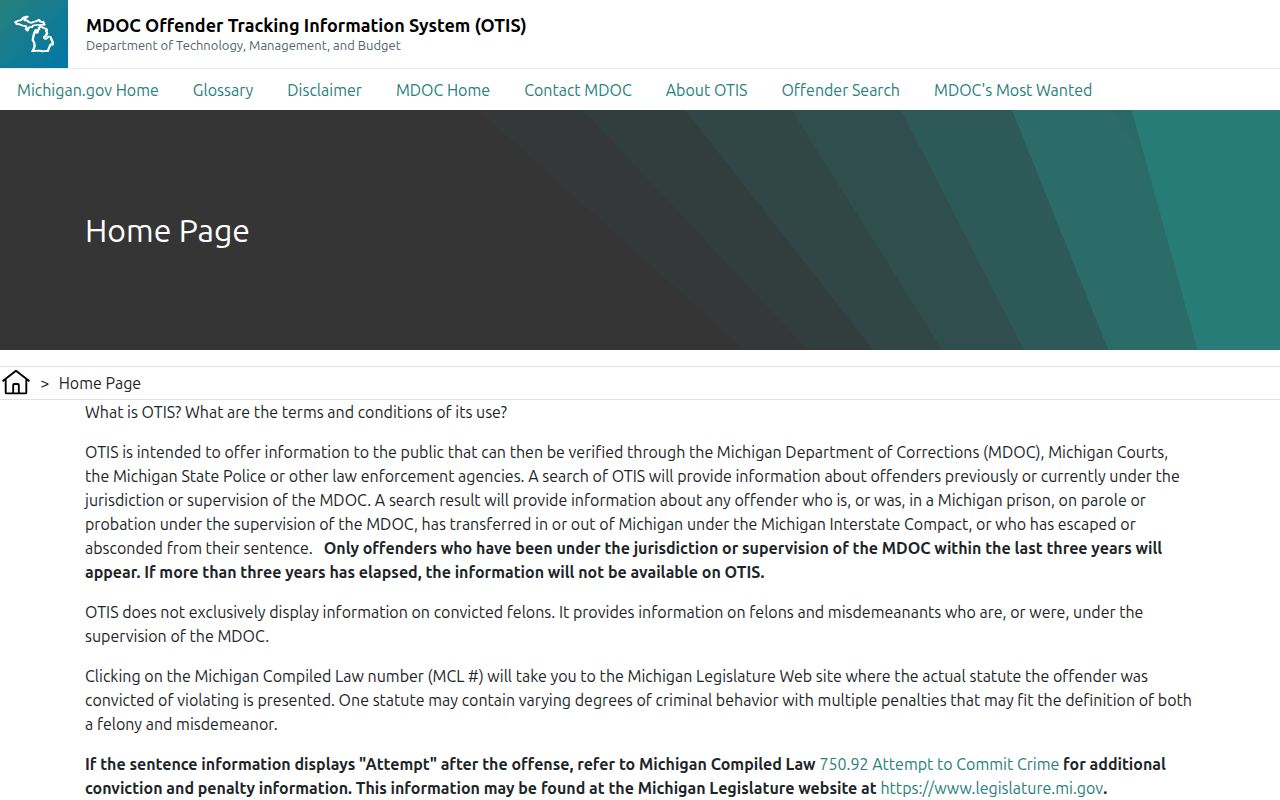
It does not calculate a Houghton County jail-only term, which must be traced through local jail and court records.
For a broader person search across custody systems, use the Houghton County released inmate lookup only after identifying whether the record is county, state, or federal.
Michigan Release-Date Credit Rules
Michigan is not an 85-percent state for covered modern MDOC sentences. Its Truth in Sentencing framework requires covered prisoners to serve 100 percent of the judicial minimum in a secure correctional facility before parole consideration. MDOC dates the framework to assaultive offenses committed on or after December 15, 1998, and other covered offenses committed on or after December 15, 2000. For those disciplinary-time sentences, traditional good time and disciplinary credits do not reduce the minimum.
MCL 800.34 governs disciplinary time and the offense-date rollout. MCL 800.35 supplies related disciplinary-time rules. Class I misconduct can produce disciplinary-time information considered by the Parole Board, but it should not be described as a fixed number of days automatically added to every judicial minimum.
Older sentences require individual analysis. MCL 800.33 preserves scheduled good time for certain crimes committed before April 1, 1987, and disciplinary or special disciplinary credits for some later crimes, subject to limits and exclusions. Its subsection governing disciplinary-time prisoners bars the older credits for that class. Under MCL 791.234, Board jurisdiction can account for eligible legacy credits in a non-disciplinary-time sentence.
No single formula safely covers every Michigan sentence. The offense date, offense, sentence type, statutory exclusion, consecutive or concurrent structure, jail credit, resentencing, and appellate action can each matter. The sentencing court and MDOC sentence record control, not a generic online calculator.
Note: Truth in Sentencing governs the minimum for covered modern cases and does not guarantee parole when that minimum has been served.
Why Houghton Release Dates Change
A date can change because the source judgment or the sentence calculation changed. A court may correct jail credit, resentence after an appeal, or amend a judgment. MDOC may recalculate consecutive and concurrent terms or correct source data. For an eligible legacy sentence, forfeiture or restoration of credits may matter. A modern disciplinary-time case must not be explained with old good-time rules.
| Factor | Possible effect | Best confirmation source |
|---|---|---|
| Corrected judgment or jail credit | Changes the sentence calculation or its starting point | Sentencing court and updated MDOC record |
| Resentencing or appellate relief | Replaces or changes the controlling sentence | Court order |
| Consecutive or concurrent recalculation | Changes how multiple terms combine | MDOC sentence record and judgment |
| Legacy credit loss or restoration | Can affect an eligible older sentence | MDOC under the applicable statute |
| Parole grant, denial, or suspension | Changes whether release follows eligibility | Parole Board, OTIS status, and Date Paroled |
| Detainer or transfer | May send the person to another custodian instead of the community | Releasing and receiving agencies |
A parole grant still precedes physical release work. MDOC says a grant goes to the Parole Release Unit, and at least 28 days must pass from the release decision to physical release. New adverse information or misconduct may suspend the grant. Therefore the hearing result, Earliest Release Date, and actual Date Paroled describe different steps.
Confirm Houghton County Release Dates
Use the source that owns the event. Houghton Corrections can address whether a person is still housed locally and whether departure was community release or transfer. The Sheriff’s FOIA route can produce an existing release form or jail-register entry, subject to review and exemptions. MiCOURT can show the bond, judgment, sentence, jail credit, or later order that supplied legal authority, though a docket entry may not show the exact time someone crossed the jail threshold.
For a state prisoner, compare OTIS with direct MDOC confirmation. The Date Paroled and a parole status are stronger evidence of prison release than the Earliest Release Date alone. A Discharge Date marks the end of MDOC jurisdiction and may come years after parole began. If a sentence field seems wrong, contact the sentencing court. If an assigned office or supervision status seems wrong, contact the listed field office.
MI-VINE may supply a release or transfer alert when the responsible agency participates and reports the event. Houghton County feed participation was not independently proven through a current official participant list, so a missing record is inconclusive. The detailed registration path appears in the Houghton County VINELink check. Treat an alert as prompt notice, then confirm it against the Sheriff, court, or MDOC record.
The MDOC release-date guidance explains how to read the official fields.
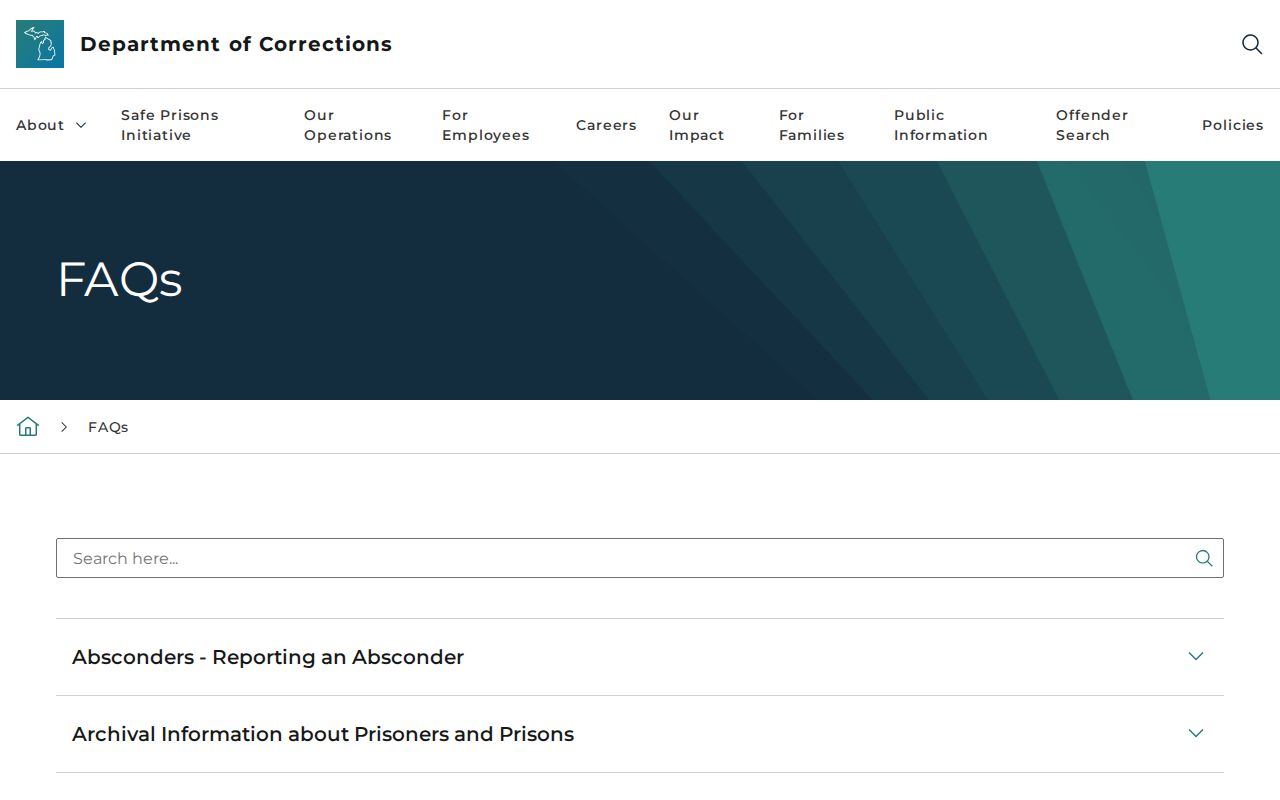
The guidance reinforces that eligibility, physical release, and final discharge are separate events.
Houghton County Jail Date Calculation
An OTIS Earliest Release Date must never be transplanted onto a Houghton County jail-only sentence. The local calculation depends on the judgment, sentence start, jail credit, the structure of any other terms, and any law that applies to that specific sentence. The research found no official Houghton public calculator, written local good-time policy, weekend-release rule, or scheduled release hour.
Ask the 97th District Court or 12th Circuit Court clerk for the controlling judgment and related entries. Then ask the Sheriff how the jail applied the order and whether another hold exists. A court order can establish the legal basis for release, while the jail release record provides the actual date and time. Both may be needed.
Work Camp status needs the same care. An approved participant may leave the minimum-security Work Camp under a work arrangement while remaining in county custody. That trip is not final discharge. Confirm completion of the county commitment with the Sheriff and sentencing court rather than treating presence at work as proof of release.
A bond event also needs two records. The Corrections page links an online payment channel, yet payment alone does not establish that processing is complete or that no other hold applies. The court order and payment can explain authority, while the jail entry confirms the later physical exit. Ask whether another county, tribal, state, or federal agency took custody when community release is uncertain.
Do not estimate the date by counting days from an arrest alone. Credit, sentence terms, and later orders must come from the controlling records.
Houghton Release-Date Terms
Small wording differences prevent large mistakes. A minimum term is the earliest point relevant to parole jurisdiction in an indeterminate state sentence. A maximum term is the outer sentence limit as lawfully calculated. Parole is release from prison to community supervision. Discharge is the later end of MDOC jurisdiction. A detainer is a request or authority from another agency that can lead to continued custody or transfer.
- Earliest Release Date
- The OTIS field for the first parole-eligibility point, not a promised exit date.
- Maximum Discharge Date
- The calculated outer endpoint of the MDOC sentence, subject to lawful change.
- Date Paroled
- The date field tied to release from prison onto parole supervision.
- Discharge Date
- The date MDOC jurisdiction ended for the displayed sentence.
- Detainer
- Another agency’s basis to hold or take custody, which can prevent community release.
Use the exact label when saving or discussing a record. Calling every date a “release date” can turn eligibility into a promise, turn discharge into a prison exit, or hide a transfer to another custodian.
Note: Preserve the field label, status, source, and access date together when an official date will be used in a legal or personal verification.